
Guides
Farm to Table Restaurant Not Earning Money: Profit Troubleshooting
Quick Answer
Farm to Table restaurant not earning money guide for diagnosing menu costs, service speed, ingredient supply, staff wages, Farmers' Market sales, and layout problems.
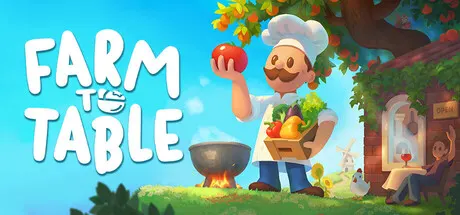
If your Farm to Table restaurant is not earning money, the fix is rarely “unlock everything.” Farm to Table connects backyard farming, ingredient prep, recipes, staff, machines, dining room service, and Farmers’ Market selling. Profit disappears when one part of that chain expands faster than the others.
Use this with the Farm to Table game guide hub and Farm to Table money making guide for the larger economy route.
Last checked: May 14, 2026. Farm to Table is in Steam Early Access. This troubleshooting guide uses the Steam store page, Steam Community, and SteamDB as source anchors. Exact recipe values, staff wages, timers, and machine outputs should be verified in the current build.
Quick Answer
Cut the menu to the dishes you can supply reliably, stop overhiring until service is actually blocked, protect tomorrow’s ingredients before market sales, and fix walking or station bottlenecks before buying more decor. Test one change per shift so you know what improved profit.
Profit Diagnosis Table
| Symptom | Likely cause | First fix |
|---|---|---|
| Guests arrive but profit stays low | Menu margin is weak | Compare ingredient cost, prep time, and sale value |
| Orders fail or wait too long | Service speed or layout problem | Shorten menu and reduce walking loops |
| Kitchen stops mid-shift | Ingredient supply is unstable | Grow or prep only for active dishes |
| Payroll eats profit | Staff hired before demand justified it | Keep only roles that remove a bottleneck |
| Market sales feel good but restaurant stalls | Wrong surplus sold | Reserve menu ingredients before selling |
| Machines run constantly but cash is flat | Processing not tied to profitable dishes | Batch only inputs with clear use |
The best money test is boring: run a small menu for one day and record what ran out first.
Menu Margin Check
| Menu problem | What it looks like | Correction |
|---|---|---|
| Too many dishes | Every recipe needs a different ingredient | Keep two or three reliable staples |
| Weak margin | Dish sells but does not cover effort | Replace with a simpler or higher-value dish |
| Ingredient conflict | Two popular dishes consume the same scarce item | Choose one main use for that item |
| Prep overload | Cooks spend the day catching up | Prep before service or simplify menu |
| Prestige too early | Fancy dishes look good but drain cash | Stabilize staples before luxury plates |
Do not confuse variety with profitability. Variety is useful once the supply chain is stable. Before that, it creates hidden shortages.
Staff Wage Check
Hiring staff should buy time or throughput. It should not be a decoration upgrade.
| Hire when… | Wait when… |
|---|---|
| A repeated task blocks orders every shift | The restaurant is not busy enough yet |
| One role clearly limits service speed | Layout is the real problem |
| The added worker creates more revenue than wage pressure | Ingredients run out before staff matters |
| You can keep the menu supplied | New hires idle or walk into traffic jams |
If you hire a waiter but food is not ready, you hired the wrong solution. If you hire a cook but ingredients are missing, the farm and pantry are the real bottleneck.
Ingredient Supply Check
| Supply layer | Healthy sign | Warning sign |
|---|---|---|
| Farm | Tomorrow’s menu has planned crops | Planting is random |
| Gathering and fishing | Special ingredients are used deliberately | Rare ingredients vanish into low-profit dishes |
| Pantry | Staples cover several recipes | Every dish depends on a fragile item |
| Machines | Processed goods feed known recipes | Machines run because they exist |
| Market | Only true surplus is sold | Market sales empty the restaurant |
Restaurant money is made before the guest sits down. If the pantry is wrong, service will only reveal the problem.
Layout And Service Speed
Poor layout turns good recipes into slow tickets. Before buying more seats or decor, watch one shift and find the repeated delay.
| Delay | What to inspect |
|---|---|
| Servers walk too far | Table placement, kitchen pass, storage access |
| Cooks collide or idle | Station spacing and ingredient path |
| Guests wait with empty tables | Host or seating flow, if the current build exposes it |
| Food finishes but does not move | Expediting path and waiter availability |
| Market and kitchen interfere | Separate surplus sales from menu ingredient flow |
Read the Farm to Table restaurant layout guide if money only drops during busy service.
One-Shift Recovery Plan
| Step | Action | Why |
|---|---|---|
| 1 | Cut the menu to reliable dishes | Removes ingredient and station chaos |
| 2 | Reserve tomorrow’s ingredients | Stops market sales from starving service |
| 3 | Watch the first failure | Identifies real bottleneck |
| 4 | Change one variable | Makes the result readable |
| 5 | Reinvest only after profit improves | Prevents panic spending |
This is especially important in Early Access, where values can change. If recipe prices or timers shift after a patch, a small controlled test beats old advice.
Common Money Mistakes
- Adding recipes because the restaurant feels too small, not because the supply chain is ready.
- Hiring staff before proving the role earns back its cost.
- Selling ingredients at the Farmers’ Market without checking tomorrow’s menu.
- Buying decor while kitchen flow or service speed is broken.
- Running machines without knowing which dish they support.
- Expanding seats while existing guests already wait too long.
Related Guides
- Farm to Table money making guide
- Farm to Table 5-star restaurant guide
- Farm to Table restaurant layout guide
- Farm to Table staff guide
- Farm to Table guide hub
FAQ
Should I raise prices?
Only after you understand service quality and demand. Higher prices cannot fix missing ingredients, slow service, or wasted payroll.
Is the Farmers’ Market better than the restaurant?
It is useful for surplus and pressure relief. The restaurant should keep the ingredients it needs before market sales happen.
Should I expand seating to earn more?
Not if current service is slow. More seats multiply delays when the kitchen, staff, or layout is already strained.
How do I know which dish is profitable?
Track ingredient source, prep time, machine needs, sale value, and whether it blocks another dish. The best dish is profitable and repeatable.
Sources
FAQ
Why is my Farm to Table restaurant not earning money?
Common causes are too many low-margin dishes, ingredient shortages, slow service, overhiring, poor layout, or selling the wrong goods at the Farmers' Market.
Should I add more recipes to make more money?
Not always. A shorter menu with reliable ingredients often earns better than a wide menu that stalls service.
Can staff make the restaurant less profitable?
Yes. Hiring helps only when the employee removes a real bottleneck that earns more than the wage pressure.
Should I sell ingredients at the Farmers' Market?
Sell true surplus, but protect ingredients needed for tomorrow's restaurant menu first.