
Guides
Hotel Architect Room Size Guide: Best Starter Rooms
Quick Answer
Use compact standard rooms early, then widen only when guest comfort, amenities, rating goals, or premium pricing justify the extra footprint. A bigger room is not better if it stretches staff routes or blocks service space.
Hotel Architect Tools
Choose A Room Plan Before Expanding
Use the current hotel state, not a perfect hidden formula. Pick one room plan, diagnose one symptom, and save rating checks before adding another wing.
Room Plan Picker
Choose the closest goal, then use the output as a small build test before changing the whole floor.
Starter standard room
Repeat one compact room template until guest feedback is predictable.
- Service
- Keep reception, cleaning, and basic services close enough to see the bottleneck.
- Expand
- Duplicate only after the first set stays clean and profitable.
- Risk
- Too much decoration hides whether the room size or service route is the real problem.
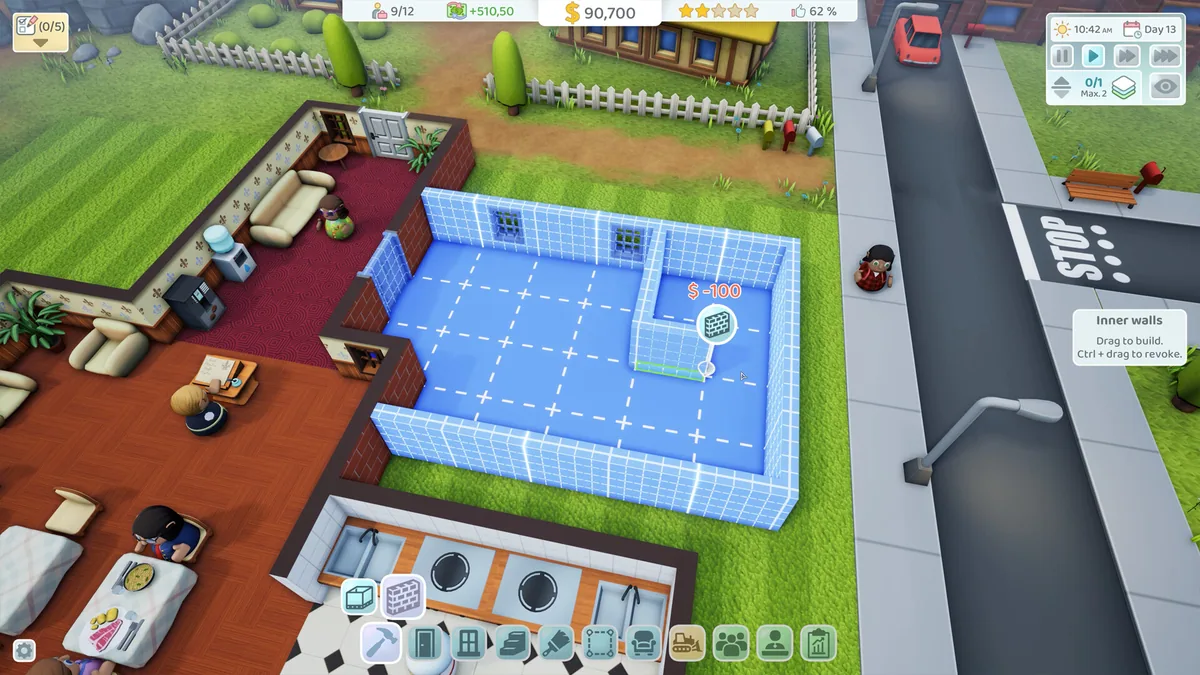
Room size in Hotel Architect is a profit decision, not just a decoration choice. A small room can earn quickly because it costs less and keeps the floor compact. A larger room can support comfort, amenities, and better ratings, but only if the hotel can afford the space and service flow. The best early answer is to build a repeatable standard room, watch guest feedback, then create premium rooms after the hotel core is stable.
Last checked: May 29, 2026. Exact room-size thresholds, furniture values, guest comfort rules, and rating math should be checked in the current Hotel Architect build. Use the tables below as planning ranges and decision rules, not final hidden formulas.
Quick Answer
| Room type | Use it when | Avoid it when |
|---|---|---|
| Compact standard | You need early profit and simple cleaning | Guests are clearly unhappy with comfort |
| Comfortable standard | You have stable cash and want fewer complaints | Hallways or service rooms are already cramped |
| Premium room | You can support better amenities and pricing | Staff routes are slow or services are missing |
| Luxury suite | You are rating pushing, not surviving | The core hotel still loses money |
Starter Room Checklist
A starter room should have:
- Clear door access from a simple corridor.
- Essential furniture without blocked movement.
- Bathroom or hygiene plan that matches the build rules.
- Enough space for cleaning and maintenance access.
- A repeatable shape you can copy without weird gaps.
- Nearby service access so staff are not crossing the whole hotel.
If a room meets those needs and guests are not complaining, do not enlarge every room just because space is available.
Room Size Tradeoffs
| Tradeoff | Small room | Large room |
|---|---|---|
| Build cost | Lower | Higher |
| Guest capacity per floor | Higher | Lower |
| Comfort potential | Limited | Better |
| Staff route | Usually shorter | Can spread out |
| Rating push | Needs careful amenities | Easier to dress up |
| Expansion risk | Easier to rebuild | More painful to move |
The useful question is not “what is the biggest room?” It is “what room can this hotel support right now?”
When To Upgrade Room Size
| Signal | Upgrade? | Why |
|---|---|---|
| Guests complain about comfort | Yes, test a wider template | Comfort may be the blocker |
| Cleanliness is the main complaint | Not first | Staff routes or cleaning coverage may matter more |
| Guests wait at reception | Not first | Front desk flow is the bottleneck |
| Cash is steady and demand is strong | Yes, add a premium lane | Premium rooms can raise revenue |
| Staff take too long to reach rooms | Maybe smaller or closer | Bigger rooms may worsen travel |
Starter Templates To Test
| Template | Best for | What to watch |
|---|---|---|
| Tight repeatable room | First profitable floor | Blocked furniture, cleaning access, comfort complaints |
| Slightly wider standard room | Stable early hotel | Whether the higher comfort offsets fewer rooms |
| Corner premium room | Testing better pricing | Whether service distance hurts the guest experience |
| Small suite lane | Rating push after profit is stable | Whether luxury costs and staff time stay manageable |
Build one template, let guests use it, then copy or revise. Do not rebuild the whole floor after one complaint. A single test lane gives you cleaner feedback.
Floor Space Budget
| Space use | Do not forget it |
|---|---|
| Corridors | Guests and staff need clean paths, not leftover gaps |
| Service rooms | Support space should be reserved before every tile becomes a room |
| Staff access | Maintenance and cleaning routes matter as much as guest doors |
| Future upgrades | Leave a clean edge for premium rooms or new services |
| Noise buffers | Bigger rooms near loud support areas may still feel bad |
The most expensive mistake is building rooms first and then discovering that services, queues, and staff movement have nowhere sensible to go.
Room Size Decision Flow
- Build a compact standard room.
- Watch the first repeating complaint.
- If the complaint is comfort, widen or upgrade one template.
- If the complaint is cleaning, fix staff routes before widening.
- If the complaint is waiting or service, fix the hotel layout before changing rooms.
- If profit is stable, add one premium lane and compare feedback.
This flow keeps room size connected to the actual blocker. Bigger rooms are useful when they answer a complaint, not when they hide a layout problem.
Next Pages To Open
- Hotel Architect Layout Guide
- Hotel Architect Beginner Guide
- Hotel Architect 5-Star Checklist
- Hotel Architect Hub
Sources
FAQ
What is the best starter room size in Hotel Architect?
Use compact standard rooms that fit essential furniture, bathroom access, and cleaning paths without wasting floor space.
Are bigger rooms always better?
No. Bigger rooms can help comfort and premium pricing, but they also increase footprint, walking distance, and build cost.
When should I make luxury rooms?
Make luxury rooms after the core hotel is profitable and service coverage can handle more demanding guests.